Sunday, February 21, 2010

Lenten Discipline

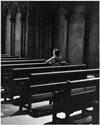
At today's service, the Rev. Mary Cat Young talked about her discipline this Lent. I usually don't blog about my personal discipline, but since she opened the door, I will walk in. Mary Cat is cutting her coffee consumption down. Chemical dependency is a difficult but good problem to approach during Lent. These temptations, be they chocolate, caffeine, alcohol, tobacco, or whatever, are exceedingly difficult to resist without help. Perhaps by talking about her personal efforts, she was recruiting us to support her in resisting that second cup of coffee.

Other temptations that some might focus on during Lent might be more in the realm of psychological ones, such as greed, self-centeredness, envy, etc.

One thing that I think was missing from the sermon was the importance of prayer. During the times of temptation that I face during Lent, I have found that prayer is the one thing that will carry me through to Easter. Lenten discipline must involve prayer, and this is one of the things that differentiates Lenten resolutions from New Year's resolutions. We all know how New Year's resolutions never seem to work. Perhaps it is the absence of the God factor from the secular resolutions that dooms their results to failure. People set out to have a New Year's resolution for their own purposes. In Lent we do what we do for the Lord. The 40 days of Lent are doable only with the Lord's help. It is something you cannot do alone. It is something that helps you realize that you are not the self sufficient being that you think you are.

Forty days is a bit more than 10% of the year. In a way, it is a tithe of time. Giving to the Lord that which is His. Like most sacrifices, this tithe of time should be quality time. Looked at in this way, giving more time to the Lord, makes it apparent that it is important to remove those things that separate us from Him.

In past seasons, I have done without Rush Limbaugh, T.V., computer games, meat, caffeine, cussing, desserts, cookies, lunch, and the list goes on and on.

Some seasons, I have focused on reading (this works especially well when combined with no television). Books suitable for Lent include the Bible of course, but I have learned much from other books as well.

In my personal observances, I usually strive for keeping a discipline the entire 46 days. I have found the fourth and fifth weeks to be the most difficult. These are the opportune times that the devil waits for as mentioned in today's readings from Luke 4:1-13
"When the devil had finished every test, he departed from him until an opportune time." (v.13)


And what about myself? This year I began Lent by praying for guidance in setting a discipline. I look at my task, and in addition to a routine of daily scripture reading, an on-line O.T. study group, prayer, and worship, I will have two disciplines, one psychological and the other physical. As far as the psychological goes, it is to be fully present when with others. My first temptation didn't wait long, it occurred on Ash Wednesday when I attended another church's service. In an unfamiliar church situation, self-consciousness creeps in, and what happens? God does not get worshipped; He does not get the tithe of time. I needed that slap in the face to get me started.

Compared to that, the physical discipline, while difficult, is more easily measured and monitored. My clothes will tell on me.


I cannot do this alone.

Wednesday, February 17, 2010

The Episcopal Lobbyists

(h/t Northern Plains Anglicans)

If you had 6.6 million dollars and wanted to do something good, what would you do?

If your answer is "hire lobbyists to get the government to solve problems for you," then you might be an Episcopalian.

What in the world does the Episcopal church want to communicate to our elected officials? Those silly resolutions passed by General Conventions of course, and it takes money to get these important messages across. How much money?
A stroll through the 2010-2012 Budget for the Episcopal church is always fun. The budget provides numbers but no details on what you are actually getting. If you go through the budget, you will find the following line items (202-231):

Advocacy Center
Direction & Administration
Staff Cost 1,090,074
Other Costs 45,045

Direction & Administration Total 1,135,119

Social & Eco. Justice, Jubilee
Total Staff Cost 1,270,810
Total Field Office: Washington 699,846
Total Domestic Poverty & Jubilee Ministries 1,019,450
Total Economic Justice 40,950
Total Environmental Justice 111,930

Social & Eco. Justice, Jubilee Total 3,142,986

Anti-Racism, Racial Just. & Gender Equality
Total Staff Cost 593,910
Total Native American Ministries 595,200
Anti-Racism, Racial Just. & Gender Equality Total 1,189,110
Peace, Int'l Affairs, and Migration
Total Staff Cost 853,764
Total Int'l Justice & Peace Making 245,180
Total Episcopal Migration Advocacy 68,250

Peace, Int'l Affairs and Migration Total 1,167,194


Advocacy Center Total 6,634,410

I was intrigued by these numbers, but I would like to be able to better follow the money. For example, why do we have a $699,846 Washington "Field Office?" Who are these staffers and what good have they done? I had to hunt around, and I was able to locate a web site for the Episcopal Public Policy Network which I assume gets some of this money.

What is the EPPN and why do we pay for it? Maureen Shea at the Episcopal Cafe had this to say,
"The EPPN is the national grassroots network of Episcopalians who call and write their members of Congress and the Administration to advocate for the public policy positions of the Church. Recent alerts have asked EPPN members to write to Congress on Israeli/Palestinian peace, opening our doors to more Iraqi refugees, the Farm Bill and its importance to hunger issues at home and abroad, empowering women, helping orphans world wide, and stopping new nuclear weapons.

With the help of the EPPN, lay and clergy leaders, bishops, and yes, the Presiding Bishop, Office of Government Relations staff bring the positions of the Episcopal Church to our nation’s lawmakers. We were very pleased when the Presiding Bishop testified before the Senate Environment and Public Works Committee on climate change on June 7. The policy positions are established by the General Convention and Executive Council, and include the full range of social justice issues - Millennium Development Goals, international peace and justice, human rights, immigration, welfare, poverty, hunger, health care, violence, civil rights, the environment, racism, and issues involving women and children both at home and abroad."

She forgot to mention the Episcopal church's support for abortion.

Looking through the "Blue Book" for a report from EPPN on their effectiveness was unrewarding (although it might be buried in there somewhere), so I went a-Googling.

The staff of EPPN includes Alex Baumgarten:

"Alex Baumgarten... worked as a strategist on federal and state campaigns..."

That must have been before he travelled to Cuba with Bishop Griswold.


Hmm..., I wish I could figure out what campaigns he worked on as a strategist.

Also on the DC staff is Mary Getz who,

worked for the Democratic Congressional Campaign Committee assisting priority campaigns across the country with fundraising, organizing and communications.


And David Benson-Staebler who,

Interned with U.S. Representative James Louis "Jim" Oberstar a Democratic-Farmer-Labor Party member, representing Minnesota's 8th congressional district.


and worked for a couple of months for Rep. Betty McCollum (D. Minn)

And DeWayne Davis,

Prior to joining the Episcopal Church, DeWayne was Director of Federal Relations at Sallie Mae, Inc. DeWayne previously served as Senior Legislative Assistant to then-Democratic Whip Steny H. Hoyer. He also served as a legislative aid to Reps. Chet Edwards (D-TX) and Peter Visclosky (D-IN) and an economic and health policy analyst for the National Conference of State Legislatures and the Democratic Leadership Council...


Do we see a pattern here? An "inclusive" church that supports non-discrimination appears to need some work when it comes to political discrimination.

And I was wondering why these people have been pushing for Obama's health care plan. DOH!
And they are doing it with my money!

Why should the church bother with politics? Are they trying to convert those senators and congressmen who do not espouse the wacko views of the Episcopal General Convention into believers of biblical revisionism and supporters of the liberal cause du jour? Does anyone think the Episcopal church would refuse communion to a politician that did not support abortion? Maybe this is all part of some vast radical hospitality conspiracy: The modern equivalent of Jesus' dining with tax collectors and prostitutes is to schmooze with politicians, and since I am a good Episcopalian, I will pay someone else to do the dirty work. I will hire a lobbyist! And since I am a good Episcopalian, I will hire Democrats to be my advocates.
This social activism stuff gets really creepy when it means getting involved with politicians doesn't it?

Unfortunately, since Jesus' day, the price for a seat at the table has gone up. $6,634,410 spread out over 3 years works out to $6058.82 a day, or roughly $2000 a meal (I know, I know, not all that money is for lobbying). Should we be dining with sinners? Yes. Should the meal cost 2000 bucks? Heck no! Did Jesus have to pay people to dine with Him? No, (they did not know that He would pay with His life). In fact when we sinners come to Him today, He still gives everything freely. The only price for the meal ticket is what we have to give up. The price of giving up our sins and accepting His transformational power.

The radicals of yesterday have become the powers of today, hoping to transform the world to their liking, and they are living off my dime. I don't think any real good is being done with our money through this "Advocacy Center." Their message does not sell. General Convention resolutions lack real transformational power. If today's radicals would just step back and focus on Jesus' transformational power, they would find real change, and that this can be spread the old fashioned way, one soul at a time.

I think we ought to chelate these Episcopal free radicals before they do any more damage to our budget.

Sunday, February 14, 2010

Radical Hospitality

The Rt. Rev. Mark M. Beckwith, Bishop of Newark's address at the 136th Annual Convention of the Diocese of Newark was featured by Canon Kendall Harmon at T19 the other day.

Reading this helped me better understand problem with the code words, “radical hospitality” as understood by the liberal elite of the Episcopal church. The following is from Bishop Beckwith's address:

“So – what I see, is a diocese that dares to embrace the stranger; is willing to listen to the story of the stranger; to be transformed by the stranger – and through all of that to be brought deeper into relationship with God.
This is counter cultural. It may seem radical. So be it. It is what we have been doing; what we are called to do. It is what God calls us to be. Take a deep breath. We’re going deeper – with the hope and justice of Jesus.”

(To the uninitiated, "justice" is another Episcobable code word for the liberal agenda)

The problem I see is with the Bishop's "transforming stranger" analogy. He had earlier referenced the Benedictine rule of welcoming visitors and showing hospitality. He misses the point that the stranger was not going to be allowed to come in to the monastic life and change the Rule of Benedict. The hospitality of the Benedictine might transform the stranger, not the other way around. The Bishop leaves the impression that we are to take in the "stranger" (this is a TEC code name for GLBT person) and be transformed into acceptance of their radical theology. One of my problems with people who argue that Jesus, when going against custom and dining with sinners, demonstrated the radical hospitality of Bishop Beckwith, is the lack of insight into the direction of flow of transformational power. To be a sinner and to sup with Jesus is an invitation to be transformed by Him, not an invitation for me to transform Him.

I have an idea that runs counter to the prevailing liberal culture of the church. This is the thought that these liberal bishops need another invitation to sit down with the Bible and be taught the basics once again. Who is the bishops' teacher anyway?

From today's readings, Luke 9:28-43, we are reminded of the shortcomings of earthly pastors:
"On the next day, when they had come down from the mountain, a great crowd met him. Just then a man from the crowd shouted, ‘Teacher, I beg you to look at my son; he is my only child. Suddenly a spirit seizes him, and all at once he shrieks. It throws him into convulsions until he foams at the mouth; it mauls him and will scarcely leave him. I begged your disciples to cast it out, but they could not.’ Jesus answered, ‘You faithless and perverse generation, how much longer must I be with you and bear with you? Bring your son here.’ While he was coming, the demon dashed him to the ground in convulsions. But Jesus rebuked the unclean spirit, healed the boy, and gave him back to his father. And all were astounded at the greatness of God."

Just who was Jesus referring to when he said, "You faithless and perverse generation," the crowd, the man from the crowd, or could it be that he was chastising His disciples?

Wednesday, February 10, 2010

The 8 O'Clockers Must Be Exterminated


Richard Giles+ former dean of the Episcopal Cathedral in Philadelphia and a recent contributor to Pray Tell Blog got some interesting comments after his January 7th post "Institutionalizing Dissent." Here is a sample from Fr. Giles' post:

The attractions of the 8 o’clock are predictable. Its archaic language perpetuates the notion that God is one step removed from everyday life, kept safely in his antique Tudor box; you can sit where you like, at a guaranteed safe distance from your neighbour; you can kneel (or more accurately crouch) with no fear of being asked to stand to pray, or to form a circle; there is no danger of having to acknowledge the presence of other Christians, let alone touch them; there is a very good chance that you will avoid a homily (even though Cranmer mandated this); there is no requirement to sing or look cheerful; and there is no danger at all of being required to socialize after the service, or being asked to do anything – to sign up, to volunteer, to take part.

What a sweeping condemnation.
"The persistence of the phenomenon of the 8 o’clock is indicative of a mindset which has not just rejected modern liturgical language or form, but has decided to step aside from that journey. The love of archaic language is a small sign of a bigger picture – of an attitude of heart and mind that wants no truck with today, either in the Church or in the world. It seeks reassurance not adventure."

I wonder what he thinks about Eucharistic Prayer C?
Whatever our strategies for keeping on board, however loosely, those who stand aside from the mainstream, the question remains; do such measures represent a permissible freedom, a generous sign of comprehensiveness, or an avoidance of the holy task of wrestling with our differences and coming to a common mind? Is allowing two kinds of rite – one traditional one contemporary in language – to continue side by side in the same book, in the same parish, a justifiable and honourable path of unity-in-diversity, or a cop-out, an exercise in self indulgence?

Perhaps it is not too late for others to learn from our mistakes?

Should 8 o'clockers be insulted at being stereotyped in this way? As an occasional early bird, I am.

He followed up with a response to his critics on Jan 12th where he ends by writing,
I am sorry to sound such an old grouch about the 8 o’clock, and F.C.Bauershmidt is quite right to caution me about judging others’ souls, and yet ‘by their fruits you shall know them.’ Sadly, 44 years experience as a parish priest has left me with a consistent picture of the attitude of those who choose always an early Mass separate from the main body. Those who do so may claim that such a stance is about language, but it is in fact almost always and everywhere about taking part in worship one step removed from the life of the local faith community. This should not be so in theory, but invariably is, and a cause for deep sadness.

Among the 1979 BCP compromises were the various liturgical options. Is Fr. Giles saying that Rite I is "looking back," and keeping it in the BCP was a mistake, or does he have a problem with a church that has separate Rite I and Rite II services back to back? If I am reading both posts right, he has issues with both as sources of division, but the true source of his problem is a problem with people who differ from him. As Supreme Dalek, he could fix the problem of the 8 o'clockers with a blast from his ray gun.

So much for an inclusive church.

For more about Richard Giles+ and his career in radical church renovations read
"Re-pitching the Wrecking Ball: Feverish haste to remodel churches reflects radical renovation of theology"
by Matthew Grantham in the March 2002 Adoremus Bulletin. Here is a sample,

Giles complained that traditional Episcopalian churches "shout non-participation".

"They shout hierarchy. They shout division ... they shout passive audience", he said. Giles went on to compare traditional churches to his own plans for the renovation of the Philadelphia cathedral, a process which he called "taking a Victorian building with very ornate, rigid furniture. ... and embarking on a renovation which will honor the past, not simply for the last 300 years, but for the last 2,000 years. It will take us back to the first Christian experience of being a community of the baptized".


Next time we remodel, maybe we should put Davros in charge of church renovations.


Then all divisions will cease.

Sunday, February 07, 2010

Saints Win, What a Party!

I was sure that the Saints would be martyred in the arena tonight, but I was wrong, and after beating the Colts 31-17 for the first ever New Orleans Saints Super Bowl win, we are going to party!!!


UNBELIEVABLE!!!

When Grace Strikes, People Fall

This week our rector delivered a fairly straightforward sermon on grace and used an example one of today's hymns, "Amazing Grace." This did mesh with the Gospel reading where Simon was struck by that grace and fell to his knees in Luke 5:1-11.
Once while Jesus* was standing beside the lake of Gennesaret, and the crowd was pressing in on him to hear the word of God, he saw two boats there at the shore of the lake; the fishermen had gone out of them and were washing their nets. He got into one of the boats, the one belonging to Simon, and asked him to put out a little way from the shore. Then he sat down and taught the crowds from the boat. When he had finished speaking, he said to Simon, ‘Put out into the deep water and let down your nets for a catch.’ Simon answered, ‘Master, we have worked all night long but have caught nothing. Yet if you say so, I will let down the nets.’ When they had done this, they caught so many fish that their nets were beginning to break. So they signalled to their partners in the other boat to come and help them. And they came and filled both boats, so that they began to sink. But when Simon Peter saw it, he fell down at Jesus’ knees, saying, ‘Go away from me, Lord, for I am a sinful man!’ For he and all who were with him were amazed at the catch of fish that they had taken; and so also were James and John, sons of Zebedee, who were partners with Simon. Then Jesus said to Simon, ‘Do not be afraid; from now on you will be catching people.’ When they had brought their boats to shore, they left everything and followed him.


Part of the effect of the recognition of God's grace is that we become aware of how wretched we have been, and we see ourselves as the sinners we are. We also meet the only thing powerful enough to overcome our sin, and we give thanks for His amazing grace to do this for us.

Towards the end of his sermon, our rector emphasized the personal salvation we experience in these moments. I am afraid that our rector is distancing himself from our Presiding Bishop who, at the 2009 General Convention of the Episcopal church emphasized corporate salvation over personal salvation when she said,
"... the great Western heresy -- that we can be saved as individuals, that any of us alone can be in right relationship with God. It's caricatured in some quarters by insisting that salvation depends on reciting a specific verbal formula about Jesus. That individualist focus is a form of idolatry, for it puts me and my words in the place that only God can occupy, at the center of existence, as the ground of being. That heresy is one reason for the theme of this Convention."


One of the many problems with the P.B.'s theology is that if we are saved as a corporate body, then we are also damned as a corporate body as well. The sins of the Episcopal church in supporting abortion, no fault divorce, biblical revisionism, lawsuits, and in particular the heretical theme of support for same sex blessings and homosexual bishops that was presented at the 2009 General Convention are huge corporate sins that might condemn us all. Until the Episcopal church gets knocked to its knees and repents of its sins, grace will not be bestowed on this body. In the Episcopal church of 2010 there is no corporate salvation, we should stick to the proven power (Acts 8:26-40, Acts 9:3-9, among others) of individual salvation first.

I would like to send a little advice to the P.B. so that she reconsider the value of those who feel a strong sense of personal salvation.

Our Saviour = my Saviour + your Saviour.

Wednesday, February 03, 2010

Faith, Belief and This Week's Readings

This past Monday's (February 1, 2010) lectionary readings brought together a couple of lessons about faith and belief that I will pull out of context because they made me stop and reflect a little bit.

First we heard in Hebrews 11:1-12 :
"1 Now faith is the assurance of things hoped for, the conviction of things not seen...

...6 And without faith it is impossible to please God, for whoever would approach him must believe that he exists and that he rewards those who seek him."


Paul presents us with an excellent definition of faith in #1. I don't think that even the esteemed Merriam-Webster can do better. The online definition lists,
"1 a : allegiance to duty or a person : loyalty b (1) : fidelity to one's promises (2) : sincerity of intentions
2 a (1) : belief and trust in and loyalty to God (2) : belief in the traditional doctrines of a religion b (1) : firm belief in something for which there is no proof (2) : complete trust
3 : something that is believed especially with strong conviction; especially : a system of religious beliefs

synonyms see belief"

It is interesting that Merriam-Webster presents only one synonym and that is "belief." Similar but not identical. If you ask Merriam Webster about belief, you do find an attempt to differentiate faith and belief.
"belief may or may not imply certitude in the believer . faith almost always implies certitude even where there is no evidence or proof "


Belief and faith are nouns, while to believe is a verb, and faith is listed as a transitive verb (after all nobody says "I faith in you").

I prefer Paul's definition of faith insofar as the scripture passages for Monday are concerned. Paul did not define belief in these passages, and it would have been interesting to see how he might compare and contrast the two. I have tried to digest scholarly discourses on the contrast between the two, but it all seemed too scholarly.

I am left wondering if there is a requirement for one to come before the other. Modern rationalists might find the following analogies helpful,

The first person to survive a marathon run had faith. All who follow in his footsteps have belief.

The Wright Brothers had faith. When I board a jet airplane, I believe it should fly.

I differ from the modern rationalist since I have faith that I will see Jesus if the plane crashes because I believe that God exists. Or is it the other way around? Do I believe that I will meet Jesus if the plane crashes because I have faith that God exists?

For me, faith, however ill defined, seems to have come first and has led me into belief. For many years I was in open denial of the existence of God. This is not something unique to the age of reason. Paul, in #6, shows (by noting the importance of believing that God exists) that there were those who argued against the existence of God back in Paul's day just as they do in the present age. When Paul was spreading the Gospel, did he lead those people into faith or belief, or both, and in what order? Perhaps it does not matter. Fortunately, God has a means to bring us from a state of disbelief or unbelief to belief through faith.

Some where, some when, Jesus was the means by which I was brought back to faith and belief. He spoke through the Gospels. For me, it was Luke's Gospel, but for others it might be the other reading from this Monday's lectionary John 6:27-40 :
28 Then they said to him, ‘What must we do to perform the works of God?’ 29 Jesus answered them, ‘This is the work of God, that you believe in him whom he has sent...’

...35 Jesus said to them, ‘I am the bread of life. Whoever comes to me will never be hungry, and whoever believes in me will never be thirsty 36 But I said to you that you have seen me and yet do not believe. 37 Everything that the Father gives me will come to me, and anyone who comes to me I will never drive away;...

...40 This is indeed the will of my Father, that all who see the Son and believe in him may have eternal life; and I will raise them up on the last day.’


Jesus recognized those in His presence who did not believe in Him (#36). I admit that I would probably have been one of them. Why should I or any other modern person listen to and believe in Him or His words and deeds as written in the Gospels? Why "have faith in Him" in the first place? You might think that this is a question only for the evangelist and the Christian apologist and not for oneself. I disagree. I think that the question of faith and belief are central to the problems of our age. What is certain these days? Love and death? Death and Taxes? Heaven and Earth? Who cares about all that religion and stuff when you have the Internet, cable TV, air conditioning, and a grocery store on every corner? In this day, when people can be "spiritual and not religious" without ever believing in anything, who needs faith?

When faith and belief are being tested by the zeitgeist at every opportunity, even in the church itself, it becomes of paramount importance for each and everyone of us to pray, to study, and to practice answering the question our self-centered world will ask us, and that is probably not the question of which came first, faith or belief, nor is it the question, "what do you believe," but instead,
"Why should I believe?"

When it comes time for me to hear that question, I have faith that God will provide the words to give an effective answer. At the same time, I believe that he wants me to keep studying and practicing in order to be ready for that time.