Sunday, December 29, 2013

Back To Normal?

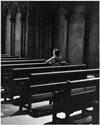
For several years, our church has treated the Sunday after Christmas worship service differently than the usual Sunday service. In place of a sermon or homily, a "carol sing" is done with members of the congregation calling out hymns they would like to sing and everyone joining in for two verses of each selection.

This Sunday, our guest priest used his authority to deliver a homily during the time set aside for "Announcements".  Our preacher has served us many times in the past, and as he is rather advanced in years, his style of delivery tends to be "deliberate" which can cause some to lose track of the message.  

I hope people were able to stay focused as this was one of his best efforts. He emphasized the awesome thing that really, really happened 2013 years ago. God came into the world, and people need to be reminded of this as a time dividing event. We prefer to live in the darkness, but light has entered in.

It is rare for us to hear about our natural inclination to keep God in heaven while we have fun in the darkness, and I thought back on how quickly the Church can turn to darkness after a time in the light. Such is the time of the Episcopal church as it immerses itself deeper and deeper into the darkness with each successive season. This year I have witnessed the darkness creeping into our little church with such innovations as a Baptism during which the "parents" were two men and the Godfather was the rector's husband, and I have witnessed the introduction of "open communion" proclaimed by the new rector on several occasions (especially on high holy days).

As our guest priest described the mystery of this supernatural occurrence which we call Christmas, I thought about how good it was to get back to normal, if only for a Sunday. I was reminded that while we are only a generation away from pulling the shades against the light, we are also just a generation away from stepping out of the darkness. As the current generation of aging revisionist priests fades away, let us pray that the damage they have done will be repaired by a future generation of leaders who reallyreally believe all that stuff the Gospel writers attested to all those years ago.


Wednesday, December 25, 2013

Christmas Really Scares Me


I was thinking about this before I saw a neighbor's Christmas display which contained,

Saurus Claws?

What really scares me about Christmas is not the thought of reindeer hooves damaging the roof,  or of a fat elf coming down the chimney, or the thought of having to pry my presents from the vestigial hands of a Tyrannosaurus  Rex, but it is the thought that there is something that has come into this world that is so otherworldly, so powerful, and so beyond my ability to control it that I should be afraid for my life.

It is the thought that there is a God who could create my world.

It is the thought that this God could enter my world.

It is the thought that it isn't my world but His.

It is the thought that someone really does know when I have been naughty or nice.

It is the thought that if I believe in Christmas, then there is all that other stuff that I must believe.

It is the thought that if I believe in the baby Jesus, then I must believe in the man Jesus and all that God-incarnate stuff.

It is the thought that I must accept that He died on the cross for me.

It is the thought that I must lose my life in order to gain life.

It is the thought that Christmas convicts me.

And all this is a gift from above?

Scary, scary stuff.

Why can't I have Christmas the way I want? I would much rather have toys and candy canes.

God came down at Christmas with a gift far beyond anything I could have dreamed up or wished for.

And he sneaked in while I was sleeping and left it in a manger.


Have a Merry, Scary Christmas everyone!


Monday, December 23, 2013

A Hope That is the "Googly-Eyed Dogma of Religious Primitives"

That quotation is found in the last paragraph, but read it all.

From the President of the Trinity Forum:

The Singularity of Grace

In What's So Amazing About Grace? author Phillip Yancey recounts:
During a British conference on comparative religions, experts from around the world debated what, if any, belief was unique to the Christian faith. They began eliminating possibilities. Incarnation? Other religions had different versions of gods' appearing in human form. Resurrection? Again, other religions had accounts of return from death. The debate went on for some time until C. S. Lewis wandered into the room. "What's the rumpus about?" he asked, and heard in reply that his colleagues were discussing Christianity's unique contribution among world religions. Lewis responded, "Oh, that's easy. It's grace." 
Lewis was not asserting that other faiths did not value or extol mercy or kindness, but that they each posit steps to earning a deity’s approval (or at least placating divine anger), rather than declare the love of God as a gift to be received. It is hard to overstate how radical the doctrine of grace must have seemed – the idea that God’s love was offered freely even to lowlifes and losers; that it could not be earned, no matter how hard one tried; that even the best of humanity could not claim an entitlement, while the worst of the lot could still receive the gift. 
The implications were incredible. It had been long and widely believed, even assumed, that those who prospered had earned supernatural favor; those who suffered had culpably piqued some deity. One got what was coming to him. The idea of grace offered a new lens through which to view the reality that we each experience both suffering we did not cause and goodness we do not deserve. It invigorated the virtue of gratitude, which requires recognition of blessings to which one is not entitled. And it made possible a new realization of forgiveness, and the spiritual freedom that attends it.
Of course, the Christian conception of grace was not merely the introduction of a doctrine, but the arrival of its incarnation. And once Grace showed up, He turned the world upside down. The late philosopher Dallas Willard spoke of “The Great Inversion” in which Jesus demonstrated, through his revolutionary way of life, a new way of understanding God, the world, other people, reality as we know it. He deliberately flouted the metrics of virtue and respectability in his age, choosing to heal the sick on the Sabbath, hang out with scoundrels, speak privately with women, even verbally assault clerics. He forgave and healed those who asked, even when it broke the law to do so. He claimed that “abundant life” was realized apart from position or wealth, and asserted that love of God and neighbor was the highest end and deeper purpose of elaborately codified laws. 
He did not give easy answers to the deep questions of pain and suffering, but offered himself as a means to wisdom and understanding. His arrival was steeped in humiliation – a suspect birth, in a dirty cave outside a backwater town. His brief life was terminated by a horrific death – flailed to deformation, nailed naked to crossbeams between criminals, jeered and taunted by crowds. Yet he lived to show that Grace overcomes not merely the petty powers of the day, but the great powers of darkness and death. The world has never seen His like. 
The season of Advent anticipates not only the coming of Grace over two millennia ago, but also a second arrival. In our modern age, such a hope may seem foolish and fantastical, the googly-eyed dogma of religious primativists. Yet the orthodox Christian faith has always held out this promise – that Grace will return again, to make all things new. It is this hope that is foreshadowed in the individual transformations of Grace-struck lives, as well as the birth we celebrate this week: 
Come, thou long expected Jesus,
Born to set thy people free;
From our fears and sins release us,
Let us find our rest in thee.
Israel’s strength and consolation.
Hope of all the earth thou art;
Dear desire of every nation,
Joy of every longing heart. 
Warmly,
Cherie Harder
President

Sunday, December 22, 2013

T'was the Sunday Before Christmas

T'was the Sunday before Christmas, and all through the church,
not a creature was stirred by an imprecatory verse (Ps 80:16).
The congregation sat nodding as the lessons were read.
With visions of lunch and bowl games filling their heads.
The congo in their warm coats and their outstretched toes,
Had just settled in for a nice sermon's doze.

When up from the back pew there arose such a tattler
Who claimed that the all of those missing verses really did matter.

So I opened my Bible app and anxiously read,
Romans 1:18-32 when a loud voice said,
"Heed Romans, heed Isaiah, heed Jonah and Job,
Heed Galatians, Ephesians, Titus and Jude."
Don't slash away, don't stash away,
But read away, read away, read them all.

Then down by the lectern, Bible pages started to flutter,
and verses began flying causing the congo to sputter.
The people were filled with verses so bold
They screamed and they shouted "Why weren't we all told!"

"That God might care that we should follow His call,
That He might be judge and ruler of all.
That He would chance send us His one and only son
To engage us, to enrage us,
And by the Word enlighten us
That His victory be won!"

And they sang, and they prayed, and their knees became weak
Until the church doors flew open, and they dashed to the street.

And I listened in wonder as they cried as they ran,

"Thank God for Jesus, God's gift to Man!"

UPG

Wednesday, December 18, 2013

Why Would God Become Vulnerable?

Practicing succinctness today:
"To love at all is to be vulnerable. Love anything, and your heart will certainly be wrung and possibly be broken. If you want to make sure of keeping it intact, you must give your heart to no one, not even to an animal." C.S. Lewis, Four Loves
 "For God so loved the world that He gave His only begotten Son, that whoever believes in Him should not perish but have everlasting life." John 3:16 (New KJV)

Sunday, December 15, 2013

Playing the Odds

In today's sermon, our preacher touched very lightly on the risks of Faith while taking a pot-shot at dogma by calling it a low risk approach.


(From ReverendFun)

With this week's lottery jackpot soaring to 550 million dollars, millions are spending a dollar on the incredibly tiny chance of hitting the winning combination of numbers. The odds of winning are estimated to be 1 in 250,000,000.

Ever wonder why some of the same people who buy a lottery ticket won't buy this ticket:
"He that believeth on the Son hath everlasting life: and he that believeth not the Son shall not see life; but the wrath of God abideth on him." John 3:36 KJV
For those folks, the odds of getting struck by lightning really are greater than the odds of winning the lottery.

Those troubling points of dogma, that we are called to believe in Jesus as Lord in order to have everlasting life, are things we must take the chance to accept. I have this idea that dogma is a way the Church has of putting one's Faith into words, and that may be taking a riskier approach than many people appreciate. For one thing, once you declare your Faith in Jesus, out loud or in writing, odds are that you will become a target.

What are the odds that you will ask someone to take a chance on Jesus as you stand in line for your lottery ticket this week?

Play the odds.

Wednesday, December 11, 2013

Rather than Celebrate the Solstice, Why Not Lament Jephthah’s Daughter Instead?

It has been two years since I last reported on this, so it is time for an update of Episcopaganism Solstice celebrations with an added suggested alternative.

  • St. Cyprian's Episcopal Church in San Francisco has a Celtic Winter Solstice Concert Saturday 21 December 2013
  • New York's Cathedral of St. John the Divine Winter Solstice Celebration, by Paul Winter
"In ancient times, observers watched the sun sink lower in the sky each day, and feared it would disappear completely and leave them in darkness.
People practiced special rituals intended to entice the sun’s return. Bonfires and candles, with their imitative magic, helped fortify the waning sun and ward off the spirits of darkness. These symbols live on in our modern seasonal customs: the candles of Hanukkah and Christmas are kin to the fiery rites of old, which celebrated the miracle of the earth’s renewal.
These traditions reflect our need to come together in times of extended darkness. We celebrate not only the rebirth of the sun, but the community of life on earth."
  • Camp Bratton-Green Mississippi whose goal is
"To foster and nurture the spiritual growth of children and young people
through a Christian camp experience."
offers a
"Winter Solstice for high-schoolers over the Christmas break each year."
  • St. Paul's Cathedral Syracuse, Syracuse Community Choir Winter Solstice Concert 2013
  • The Episcopal Church of the Redeemer Cincinnati has a
"traditional Celtic Winter Solstice program featuring the Clark-Jones trio is scheduled for 4 p.m. Saturday, Dec. 21."
  • I suspect St. Michael and All Angels in Columbia SC (formerly know as St. Michael and All Druids but now mercifully under new administration) needs to update their web page which still lists (but not on the calendar),
"On the appropriate dates, the Winter and Summer Solstices and Fall and Spring Equinoxes are observed in the Outdoor Chapel of Refuge and Grace."
"A Winter’s Night: Music and Poetry for the Solstice: music perfect for the holiday season, interwoven with text and poetry narrated by special guest, NPR’s Neal Conan."

Thankfully the list of Episcopal churches advertising their Winter Solstice celebrations is getting shorter. I guess all the negative press might have had something to do with it, but more than likely it is the poor attendance of these services by informed pewsitters or it is due to the apathy of pagans who would rather stay home and worship the sun at home.

If the Solstice services are a poor draw for your church, might I suggest a sure fire crowd magnet?

How about a Lament for Jephthah's Daughter?


From RitualWell

"The story of Jephthah’s Daughter (Judges 11) tells us that Jephthah the Gileadite made a vow to the Lord before going into battle with the Ammonites. He vowed that if he succeeded in battle he would offer up to the Lord as a burnt offering whatever first came forth from his doors of his house to meet him. When his daughter (who is unnamed in the text) comes out with timbrels and dances to greet him, he rends his clothes, saying that she has brought him very low and troubled him, but that a vow to God cannot be retracted. She does not protest, but obtains permission to spend two months in the mountains with her companions, to bewail her virginity. When she returns, Jephthah fulfills his vow. An epilogue tells us that it was a custom for the daughters of Israel to lament her death for four days each year. This is the earliest example in recorded history of the fact of women gathered together in an annual ceremony."
"This ritual of grieving may be performed on 11 Cheshvan (Oct 25-26), the date of mourning for the death of Rachel and an occasion for mourning the exile of the Shekhinah and the loss of the feminine. Alternatively, this ritual may be performed on the winter solstice, which according to medieval Jewish tradition is the date on which Jephthah's daughter died."
I can see it set to music with dancers, wailing women, angels, and choirs all performing in a darkly lit church representing the longest dark night of the soul.

I think it might work.