Falstaff: "The better part of valour is discretion; in the which better part I have saved my life."(Shakespeare, Henry IV)
The Rev. Mary Cat Young was our preacher today, and she had the task of performing a double baptism after reading the tale of the beheading of John the Baptist and his head being served up on a platter to Herodias. I want everyone to consider how they might handle this problem. Mary Cat honestly said that it was too gruesome a thing to preach about before a baptism and used her discretion by talking instead about her own baptism. Maybe she was right to do so, for if you can't do it, admit it and go on rather than gross out the congregation and visitors with too many graphic details.
One thing can said for liberal preaching, it is intended to make you feel good. So why do I often come out with that uncomfortable feeling that something is missing or wrong? Maybe because there is an unsaid suggestion that we in the pews should not hear talk of headless baptizers, bloody battles, sin, the fear of God, or the wrath of God. Or that such talk keeps people from hearing the Gospel message of hope and love. I believe this is a reason why many Sunday services in the Episcopal church will leave out some of the "ugly bits" in either the Psalter, or the O.T. reading, the reading from the Epistles, and, of course, from the sermon. For years, I was content to listen to this expurgated version of Christianity, and was falling into the classic trap of believing that God's goodness should fall within my human understanding of goodness. To hear the story of John is painful to us. Where is God's goodness in that? Many believe that pain cannot be good, so let's not talk about those painful bits.
How can people get over the indoctrination of "feel good" worship and be able to explain Christianity to their disbelieving friends and acquaintances? Shouldn't we study those painful passages in more detail and try to reconcile them with the loving passages?
Today's lessons showed us, quite graphically, the cruelty of sin, and the power that authorities hold over our lives. Of course, Jesus proved that He, not earthly kings like Herod, has the power over life and death. But still, the question of pain occurring to good people, such as John's imprisonment and beheading, comes up. Was it his fault due to a lack of discretion? Did he have to die? How can we explain it? Do we run from the problem?
No!
"Once more unto the breach, dear friends, once more"(Shakespeare, Henry V)
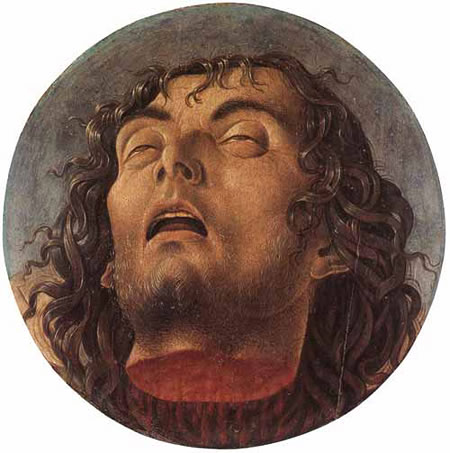
I for one can't run from that awful image of John's disheveled face and bloody neck on a platter. It seems to me to be a problem of getting past the picture. I tried to get past it by looking into the root causes of evil and cruelty, the Christian response to evil, and how to get from point A to point B. I looked at today's Gospel reading and saw a story that shows us how the world treats prophetic witness, and the story made me examine why God's world works in this way. Then I looked at how John's baptismal ministry is remembered, and how, through Jesus, we are given the sacrament of Baptism. And maybe in the course of my exploration, I saw one of God's miracles. The miracle that we witnessed today: two people, one a child, the other an adult, are now, through the sacrament of Baptism, part of the body of Christ. I witnessed them renounce Satan and turn away from the forces of sin and evil. Those forces that threaten all that is good. Only through a miracle can such forces be overcome.
No pain, no gain. No cross, no crown.




 Posts
Posts


