Wednesday, March 31, 2010

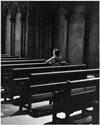
This Gives Me Goose Bumps: Auditui meo dabis gaudium et laetitiam.


Classical Net's article states:
"Allegri's masterpiece was written sometime before 1638 for the annual celebration of the matins during Holy Week (the Easter celebration). Twice during that week, on Wednesday and Friday, the service would start at 3AM when 27 candles were extinguished one at a time until but one remained burning. According to reports, the pope would participate in these services. Allegri composed his setting of the Miserere for the very end of the first lesson of these Tenebrae services. At the final candle, the pope would kneel before the altar and pray while the Miserere was sung, culminating the service."


Hearing that at 3 a.m. would be sooooo cool.

Translation:
Psalm 51 (KJV)

Have mercy upon me, O God, according to thy lovingkindness: according unto the multitude of thy tender mercies blot out my transgressions.

Wash me throughly from mine iniquity, and cleanse me from my sin.

For I acknowledge my transgressions: and my sin is ever before me.
Against thee, thee only, have I sinned, and done this evil in thy sight: that thou mightest be justified when thou speakest, and be clear when thou judgest.

Behold, I was shapen in iniquity; and in sin did my mother conceive me.

Behold, thou desirest truth in the inward parts: and in the hidden part thou shalt make me to know wisdom.

Purge me with hyssop, and I shall be clean: wash me, and I shall be whiter than snow.

Make me to hear joy and gladness; that the bones which thou hast broken may rejoice.

Hide thy face from my sins, and blot out all mine iniquities.

Create in me a clean heart, O God; and renew a right spirit within me.

Cast me not away from thy presence; and take not thy holy spirit from me.

Restore unto me the joy of thy salvation; and uphold me with thy free spirit.

Then will I teach transgressors thy ways; and sinners shall be converted unto thee.

Deliver me from bloodguiltiness, O God, thou God of my salvation: and my tongue shall sing aloud of thy righteousness.

O Lord, open thou my lips; and my mouth shall shew forth thy praise.

For thou desirest not sacrifice; else would I give it: thou delightest not in burnt offering.

The sacrifices of God are a broken spirit: a broken and a contrite heart, O God, thou wilt not despise.

Do good in thy good pleasure unto Zion: build thou the walls of Jerusalem.

Then shalt thou be pleased with the sacrifices of righteousness, with burnt offering and whole burnt offering: then shall they offer bullocks upon thine altar.


Or follow along with the choir:
Miserere mei, Deus: secundum magnam misericordiam tuam.
Et secundum multitudinem miserationum tuarum, dēlē iniquitatem meam.
Amplius lavā me ab iniquitate mea: et peccato meo mundā me.
Quoniam iniquitatem meam ego cognōscō: et peccatum meum contra me est semper.
Tibi soli peccāvī, et malum coram te fēcī: ut justificeris in sermonibus tuis, et vincās cum judicaris.
Ecce enim in inquitatibus conceptus sum: et in peccatis concepit me mater mea.
Ecce enim veritatem dilexisti: incerta et occulta sapientiae tuae manifestasti mihi.
Asperges me, Domine, hyssopo, et mundābor: lavābis me, et super nivem dēalbābor.
Auditui meo dabis gaudium et laetitiam: et exsultabunt ossa humiliata.
Averte faciem tuam a peccatis meis: et omnes iniquitates meas dele.
Cor mundum crea in me, Deus: et spiritum rectum innova in visceribus meis.
Ne projicias me a facie tua: et spiritum sanctum tuum ne auferas a me.
Redde mihi laetitiam salutaris tui: et spiritu principali confirma me.
Docebo iniquos vias tuas: et impii ad te convertentur.
Libera me de sanguinibus, Deus, Deus salutis meae: et exsultabit lingua mea justitiam tuam.
Domine, labia mea aperies: et os meum annuntiabit laudem tuam.
Quoniam si voluisses sacrificium, dedissem utique: holocaustis non delectaberis.
Sacrificium Deo spiritus contribulatus: cor contritum, et humiliatum, Deus, non despicies.
Benigne fac, Domine, in bona voluntate tua Sion: ut aedificentur muri Jerusalem.
Tunc acceptabis sacrificium justitiae, oblationes, et holocausta: tunc imponent super altare tuum vitulos.

Psalm 51 was one of the appointed readings in our lectionary earlier this week, something I discovered after I had composed this post a couple of weeks ago. I had been listening to this piece in the car (on a CD) and was haunted by the sounds, the words I could not understand, but when I looked it up, it chilled me to the core.

Miserere mei, Deus: secundum magnam misericordiam tuam.
Et secundum multitudinem miserationum tuarum, dēlē iniquitatem meam.

Have mercy upon me, O God, according to thy lovingkindness: according unto the multitude of thy tender mercies blot out my transgressions.

Amplius lavā me ab iniquitate mea: et peccato meo mundā me.

Wash me throughly from mine iniquity, and cleanse me from my sin.

Forgive me Lord for denying You.

Monday, March 29, 2010

JFK and the Separation of Politics and Faith.

Terry (of "GetReligion" fame) Mattingly's "On Religion" column is carried in the Saturday edition of the Herald, our local paper. This past week he wrote a story entitled "An Archbishop Faces Ghost of JFK." I encourage you to read it all.

He quotes candidate John F. Kennedy as saying
“I believe in a president whose religious views are his own private affair.”

“I do not speak for my church on public matters, and the church does not speak for me.

“Whatever issue may come before me as president — on birth control, divorce, censorship, gambling or any other subject — I will make my decision in accordance … with what my conscience tells me to be the national interest, and without regard to outside religious pressures or dictates. And no power or threat of punishment could cause me to decide otherwise.”

I think that JFK's strategy is an honest description of how many of us separate our spiritual life from our secular life. I wonder how many politicians have successfully used Kennedy's model to placate their voters' worries that religion might get in the way of politics. There are problems with living such a dual life as T. Matt goes on to illustrate by quoting Denver Archbishop Charles Chaput,

Kennedy’s speech was “sincere, compelling, articulate — and wrong...His Houston remarks profoundly undermined the place not just of Catholics, but of all religious believers, in America’s public life and political conversation. Today, half a century later, we’re paying for the damage..."

“...real Christian faith is always personal, but it’s never private...”

“...Too many Catholics confuse their personal opinions with a real Christian conscience. Too many live their faith as if it were a private idiosyncrasy, the kind that they’ll never allow to become a public nuisance. And too many just don’t really believe. Maybe it’s different in Protestant circles. But I hope you’ll forgive me if I say, ‘I doubt it.’"

Is it any different in your Protestant circle? I agree with Archbishop Caput; we confuse our personal opinions with a real Christian conscience over and over again. But how does one clear up the confusion? There is no Magisterium" in Protestantism to help decide what is a personal opinion as opposed to what our Lord is telling us. My Episcopal church has come to the erroneous conclusion that the results of votes cast by delegates and priests at a triennial general convention is somehow to be considered the action of the Holy Spirit and thus represents "a real Christian conscience."  I think the results of those resolutions indicate that a different voice is doing the speaking.

As Protestants, if others disagree with what we believe is our Christian conscience, we all too often leave and start a new church or join another denomination, but doesn't this just perpetuate the problem? Or does the ever splitting and multiplying denominations represent a form of spiritual free market capitalism? Unfortunately, when it comes to free market spirituality, we have to accept the fact that there will be the good (insert your favorite), and there will be the totally disastrous (i.e. Jonestown).

Is the only alternative the magisterium?


Sunday, March 28, 2010

What Other Letters Does +VGR Mean?

WARNING POTENTIALLY OFFENSIVE SUBJECT MATTER

The following was posted by Kendall Harmon at T19 on 03/27/2010

Two years ago The Episcopal Church House of Bishops asked a panel of eight theologians, four "conservative" and four "liberal," to produce a study document addressing the issue of same-sex marriage. The Rev. Dr. Grant LeMarquand, Trinity's Academic Dean, was one of the theologians on that committee. Their work is now done.

Along with Dr. Willis Jenkins of Yale, Grant went to the Spring 2010 meeting of the House of Bishops to present the work of the panel. Both Willis and Grant gave ten minute presentations summarizing the two positions, for and against same-sex marriage. The bishops then discussed among themselves in table groups following which there was an hour for the bishops to ask questions. Perhaps the most interesting thing which happened during that question period was a short speech by Gene Robinson, Bishop of New Hampshire, who expressed dissatisfaction with both papers and stated that it was time to move beyond speaking simply of "GLBT" (Gay, Lesbian, Bisexual, Transgendered) orientations: "there are so many other letters in the alphabet," he said; "there are so many other sexualities to be explored." He did not elaborate as to what those other sexualities and other letters of the alphabet might be.

The rest of this is my creation.

I should of been shocked to hear such talk from a bishop of the church, but remember that Bishop Gene Robinson is the man who preached about Genesis at a same-sex wedding and referred to Adam as "A Dame" (as recorded in an earlier post).

I am sure that Bishop Robinson might know a bit more about the subject of alternate sexualities than I, but that did not stop me from exploring the problem of the missing letters in our alphabet of sexual identities. I thought I was making some of them up, but I made the mistake of Googling the names and found out that most of them are "real." For my readers' protection, I have not included links to what the Google searches uncovered.

Okay, here's my list of those the inclusive church should now consider as suitable candidates for ordination and/or marriage.

A: Androgynists
C: Chronosexuals, cohabitors
D: Dominatrixes
E: Erotophobes
F: Fornicators
H: Hybristophiliacs
I: Incestivists
J: Jokesters
K: Katoptronophiliacs
M: Metrosexuals
N: Necrophiliacs
O: Onanists
P: Parthenogenesists, Pedophiles, Polyamorists, Porn Stars, Prostitutes
R: Retrosexuals
S: Sado-masochists, Sex surrogates
U: Unisexuals
V: Voyeurs
W: Wife Swappers
X: Xenophiliacs
Y: Yankees
Z: Zombie lovers

Of course, the church may have already unknowingly ordained or wed people who were "made" in these ways, and that is all the more reason to bless them and include them fully in the life of the church as ordained ministers, and to give them all the benefits of the sacrament of marriage as well. To do otherwise would be a terrible injustice akin to the days when the church supported slavery and told people that it was wrong to eat shellfish.

Wednesday, March 24, 2010

No Hallelujahs Shall be Sung During Lent

A few Sundays ago, the church choir in an emergency "oops" moment, skillfully substituted the words, "Lord have mercy" for the "Alleluias" in the anthem, "Draw us in the Spirit's Tether" by Friedel. The Sunday bulletin printed the forbidden words however. Was that wrong? Tracing this tradition proved to be a rewarding experience.

The custom of burying the Alleluias during Lenten worship appears to go back for many centuries, perhaps as early as the fifth century.


I browsed around and found the following at the Canberra Traditional Latin Mass Community:

The depositio (discontinuance) of the Alleluia on the eve of Septuagesima assumed in mediæval times a solemn and emotional note of saying farewell to the beloved song. Despite the fact that Pope Alexander II [in the eleventh century] had ordered a very simple and sombre way of "deposing" the Alleluia, a variety of farewell customs prevailed in many countries up to the sixteenth century...

In some French churches the custom developed in ancient times of allowing the congregation to take part in the celebration of a quasi-liturgical farewell ceremony. The clergy abstained from any role in this popular service. Choirboys officiated in their stead at what was called "Burial of the Alleluia" performed the Saturday afternoon before Septuagesima Sunday. We find a description of it in the fifteenth-century statute book of the church of Toul:

"On Saturday before Septuagesima Sunday all choir boys gather in the sacristy during the prayer of the None, to prepare for the burial of the Alleluia. After the last Benedicámus (i.e., at the end of the service) they march in procession with crosses, tapers, holy water and censers; and they carry a coffin, as in a funeral. Thus they proceed through the aisle, moaning and morning, until they reach the cloister. There they bury the coffin; they sprinkle it with holy water and incense it; whereupon they return to the sacristy by the same way."

In Paris, a straw figure bearing in golden letters the inscription "Alleluia" was carried out of the choir at the end of the service, and burned in the churchyard [...]

Thus the Alleluia is sung for the last time, and not heard again until it suddenly bursts into glory during the Mass of the Easter Vigil, when the celebrant intones this sacred word after the Epistle, repeating it three times as a jubilant herald of the Resurrection of Christ.

Father Franz Xaver WEISER SJ
Handbook of Christian Feasts and Customs (Harcourt, 1958)


The Anglican Curmudgeon posted this video a year ago before Lent 2009. Some of us could not help but watch it during Lent. I saw, but did not hear, any alleluias. Did I break my discipline? Will you be breaking yours today if you watch the video?

Sunday, March 21, 2010

Ever Notice How the Holy Spirit Only Turns Left?


From "PRAVDA online"
Episcopalians across the church celebrated the March 17 news that Diocese of Los Angeles Bishop-elect Mary Douglas Glasspool had received the required number of consents from standing committees and bishops with jurisdiction to her ordination and consecration as bishop.
Still others lamented the decision and predicted that the news, announced by the presiding bishop's office, would further strain relationships within the Anglican Communion.

Glasspool was one of two openly gay candidates on the Los Angeles slate but maintained that her sexual orientation was "not an issue" in the election.


Maryland Bishop Eugene Sutton heralded the news as "a great day for the cause of justice and the ministry of reconciliation in the Episcopal Church. I rejoice that a majority of bishops and standing committees have seen in Canon Glasspool what we have experienced in the Diocese of Maryland: that she is an exceptionally gifted pastor, administrator and spiritually centered leader who will prove to be an outstanding member of the House of Bishops."

Sutton said he prays that "the whole church will be open to the Spirit's guidance as we all move forward together in light of this historic event. The time is now for us to remove old barriers of bigotry and exclusion, and recommit ourselves to welcoming all of our brothers and sisters in Christ."

"Today the Episcopal Church said 'Amen' to what the Holy Spirit did in Los Angeles in December when we elected Mary Glasspool," said the Rev. Susan Russell, chair of the Los Angeles Diocesan Program Group on LGBT Ministry and Integrity's immediate past president. "I've never been prouder to be an Episcopalian or a daughter of the Diocese of Los Angeles -- where we are ready to turn this election into an opportunity for evangelism."


I wonder...If the election had been rejected by the bishops and standing committees, would that have been considered an action of the Holy Spirit? I don't think so. If a loud resounding "No" was heard, then the predictable wails of injustice, homophobia, bigotry, racism, or you name it would have been all over the airwaves. I believe that the revisionist left has claimed the Holy Spirit, or what they think is the Holy Spirit, but in actuality is just the echo of their own desires.

If that creates a "Holy Spirit gap," then they can have it. I am not jumping over that divide.

Daddy used to always say, "When lost, never go left." He was right. It seems like you just get more and more lost the further left you go.

Thursday, March 18, 2010

Join the Sackcloth Party

Before we start the Sackcloth Party, I have one question. Since traditional sackcloth was made of goat hair, does cashmere qualify?

I didn't think so.

This year, someone with good intentions wished me a perfectly miserable Lent. He really should be more careful what he wishes for. Several things have come up in the past few weeks, and yesterday I read a couple of articles about the Episcopal church which, together with these earlier events appear to be the fulfillment of that wish. I am struggling to decide which story is worse:

1. The story of the sale of Fr. Kennedy's former church to Muslims in fulfillment of the vow of the Presiding Bishop that she would rather see churches sold to anyone or anything other than the departing parishioners of a former Episcopal parish, or

2. The story of the election of the first openly non-celibate lesbian bishop as bishop suffragan in the diocese of L.A., or

3. The story of how the bishop of Washington D.C. (where the youth of this parish is headed on a mission adventure) is justifying his approval same sex wedding blessings with some incredibly idiotic reasoning.

None of these things should come as a surprise, but just like an expected death of a loved one, it will take time to come to grips with the reality of the fact.

Appropriately, Psalm 69 was appointed for reading this Thursday. Verses 24-30 are marked in parentheses in the lectionary and are thus considered by the lectionaristas as optional, but I have included them here.

Save me, O God,
for the waters have come up to my neck.
I sink in deep mire,
where there is no foothold;
I have come into deep waters,
and the flood sweeps over me.
I am weary with my crying;
my throat is parched.
My eyes grow dim
with waiting for my God.


More in number than the hairs of my head
are those who hate me without cause;
many are those who would destroy me,
my enemies who accuse me falsely.
What I did not steal
must I now restore?
O God, you know my folly;
the wrongs I have done are not hidden from you.


Do not let those who hope in you be put to shame because of me,
O Lord God of hosts;
do not let those who seek you be dishonoured because of me,
O God of Israel.
It is for your sake that I have borne reproach,
that shame has covered my face.
I have become a stranger to my kindred,
an alien to my mother’s children.


It is zeal for your house that has consumed me;
the insults of those who insult you have fallen on me.
When I humbled my soul with fasting,
they insulted me for doing so.
When I made sackcloth my clothing,
I became a byword to them.
I am the subject of gossip for those who sit in the gate,
and the drunkards make songs about me.


But as for me, my prayer is to you, O Lord.
At an acceptable time, O God,
in the abundance of your steadfast love, answer me.
With your faithful help rescue me
from sinking in the mire;
let me be delivered from my enemies
and from the deep waters.
Do not let the flood sweep over me,
or the deep swallow me up,
or the Pit close its mouth over me.


Answer me, O Lord, for your steadfast love is good;
according to your abundant mercy, turn to me.
Do not hide your face from your servant,
for I am in distress—make haste to answer me.
Draw near to me, redeem me,
set me free because of my enemies.


You know the insults I receive,
and my shame and dishonour;
my foes are all known to you.
Insults have broken my heart,
so that I am in despair.
I looked for pity, but there was none;
and for comforters, but I found none.
They gave me poison for food,
and for my thirst they gave me vinegar to drink.


Let their table be a trap for them,
a snare for their allies.
Let their eyes be darkened so that they cannot see,
and make their loins tremble continually.
24 Pour out your indignation upon them,
and let your burning anger overtake them.
25 May their camp be a desolation;
let no one live in their tents.
26 For they persecute those whom you have struck down,
and those whom you have wounded, they attack still more.
27 Add guilt to their guilt;
may they have no acquittal from you.
28 Let them be blotted out of the book of the living;
let them not be enrolled among the righteous.
29 But I am lowly and in pain;
let your salvation, O God, protect me.


I will praise the name of God with a song;
I will magnify him with thanksgiving.
This will please the Lord more than an ox
or a bull with horns and hoofs.
Let the oppressed see it and be glad;
you who seek God, let your hearts revive.
For the Lord hears the needy,
and does not despise his own that are in bonds.


Let heaven and earth praise him,
the seas and everything that moves in them.
For God will save Zion
and rebuild the cities of Judah;
and his servants shall live there and possess it;
the children of his servants shall inherit it,
and those who love his name shall live in it.


It is time to put on the sackcloth and ashes, for I have sinned, I have not done enough, and I am truly sorry.

Wednesday, March 17, 2010

An Epistle From the President

Okay, I admit I did edit out some of the content, large chunks in fact, but I got this today thanks to a certain someone who is "no kin to me" and who got me stuck on this mailing list.

Underground --

I wanted to take a moment to thank you directly for the outstanding work you've been doing ... I can tell you that your voice is heard in Washington every day. I see how your efforts are moving us toward victory.

... your voice is needed now more than ever before.

Raise your voice today: We must all speak out together to finish the job.

In these final, crucial days, much more will be asked of us. Our resolve will be tested.

... all of us who share this cause need courage to speak up with persistence and clarity in these final days.

I've always found that courage comes from remembering that we fight for something and someone beyond ourselves. It comes from our faith. And it comes from our commitment to those we love.

So please take a moment to remember those who inspire you -- those who give you the strength to march on.

There's very little time left, and still much to do. But I believe to my core in the power of Americans to change history when we put our mind to it. And if you'll stay with us in these final days, I know we can do it again:

Thank you for making it possible,

President Barack Obama


I think that cleaned up rather nicely. I just love it when he addresses me by my first name.